What you can do

Understand bush fire behaviour
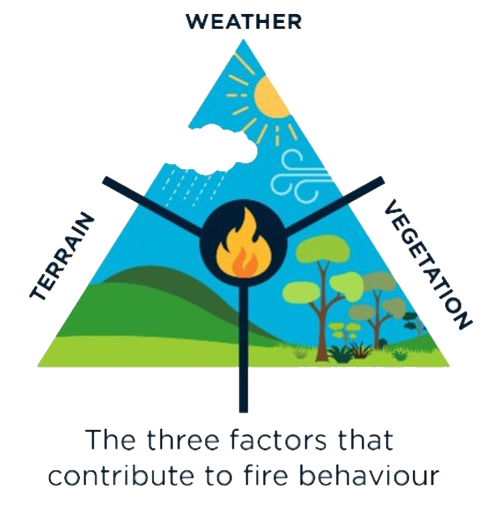
Our bushland has adapted to live with bush fire. Let’s do the same… Understanding how bush fires work is important when it comes to protecting life and property.
Bush fire behaviour is determined by bush fire fuel (vegetation), terrain, weather, and ignition.
Fuel (vegetation)
Different types of bush fire fuels burn differently: finer fuels like grasses burn more quickly and erratically, while more substantial, woodier fuels found in forests burn with greater intensity.
Much of Hornsby Shire has large areas of woody vegetation, which have supported large fires in rural, residential, and urban areas the past.
Terrain (landscape)
Fires burn faster uphill and can build in intensity and speed. With every 10 degree increase in slope, a fire will double its rate of spread; making ridge tops the riskiest place to live. Most of Hornsby’s urban development is located in these areas.
Weather
Bush fires are influenced by ‘fire weather’ – a combination of strong winds, low humidity and high temperatures. Within the Hornsby LGA this weather occurs generally over Spring and Summer and is characterised by hot dry north-westerly winds and southerly busters that can cause a fire to spread quickly from bushland areas, threatening homes, businesses and infrastructure.
Depending on weather conditions, embers, generated by burning leaves, branches and bark can be transported by wind from one location to another, causing new fires or spotting and speeding the progression of the fire front. Embers can land several kilometers ahead of the main fire front on catastrophic fire danger days.
Avoid being caught out by fire
You must Plan, Prepare, and Stay Informed to stay safe from bush fires.
Plan
Living in the 'bushland shire' means living bush fire ready
Do these now
Prepare a Bush Fire Survival Plan at myfireplan.com.au (5 minutes). It could save your life and the life of those you love.
 Download the Hazards Near Me app on your phone.
Prepare your home. A well-prepared home can be easier for you or fire fighters to defend; Is more likely to survive, even if you're not there; Is less likely to put your neighbours' homes at risk; Will give you more protection if a fire threatens suddenly, you cannot leave and need to take shelter.
Pack an Emergency Survival Kit that contains essential items and important documents regardless of whether you plan to stay and defend or leave early. Visit rfs.nsw.gov.au to learn what to pack.
Set aside protective non-synthetic clothing for each member of your family (long sleeved shirt, long pants, sturdy footwear, goggles and P2 mask).
Plan for your animals and livestock to prevent undue stress.
Check that your home and contents insurance is up-to-date.
If you are infirm, disabled or elderly you may be eligible for the AIDER Program to assist you with your property preparation. Visit the AIDER page at rfs.nsw.gov.au.
Prepare
Flame, heat and embers can all cause timbers and other combustible elements to ignite and windows to break. There are ways to prevent the transfer of flame and heat from your yard to your home and seal gaps to stop embers from entering.
Click on the image below to find out how to prepare your property all year round.
View image in full screen
Download the Bush Fire Aware brochure(PDF, 5MB)
Apply for an Approval to Burn
Check your eligibility and apply for an approval to burn vegetation in the open on your property. Apply online for an Approval to Burn a pile of vegetation.
Stay informed
Don't assume you will receive a warning as fire approaches
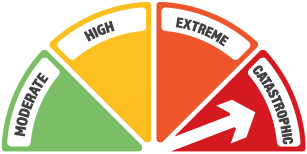
It's up to you to monitor conditions, know what the Fire Danger Rating is each day, look our for warning messages and stay connected to local media, radio stations and websites.
NSW Rural Fire Service
rfs.nsw.gov.au
Bush Fire Information Line 1800 679 737
NSW RFS Hornsby/Ku-ring-gai District 9883 2000
Hazards Near Me app

Current information about local bush fires, floods and tsunamis, fire danger ratings and hazard reductions.
Traffic and travel information

livetraffic.com
Traffic Enquiries 132 701
Bureau of Meterology

bom.gov.au
ABC Radio

AM radio 702
Department of Primary Industries

dpi.nsw.gov.au/emergencies/emergency
Hornsby Shire Council

hornsby.nsw.gov.au
9847 6666
In an emergency
Call Triple Zero (000) and ask for Police, Fire or Ambulance. If you are hearing or speech impared call 106.
Quick links

Report a Bush Fire Hazard
If you are concerned about a bush fire hazard on land adjacent to you please visit the NSW Rural Fire Service (RFS) website. The RFS will arrange for an inspection of the site to determine if a bush fire hazard exists.
 Report an Issue with a Fire Trail
If you would like to report an issue with a Council managed Fire Trail please provide details via phone or report an issue online.

Speak to Council's Fire Team
If you would like to speak with Councils fire team on any matter regarding fire management please provide details via phone or online.

Apply for an Approval to Burn
Check your eligibility and apply for an approval to burn vegetation in the open on your property. Apply online for an Approval to Burn a pile of vegetation.

Provide Feedback
To provide us with feedback on the website or a community event you have recently attended.

Find out Current Fire Activity / Alerts and Warnings
To view up to date information on fire activity and current alerts and warnings visit the NSW Rural Fire Service website.